

Wholesale Beef Supplier Spain: A Buyer’s Guide to Sourcing Premium Beef for Import
Finding the right wholesale beef supplier Spain buyers can rely on matters more than most first-time importers expect. For buyers across China, Japan, Hong Kong, and the United States, Spain has become one of the most reliable sources of premium beef in the European Union — but not every supplier delivers the same consistency, documentation, or service.
If you’re evaluating a wholesale beef supplier Spain option for the first time, this guide covers what actually matters: cuts, certifications, logistics, and current market context.
Why Buyers Choose a Wholesale Beef Supplier in Spain
Spain is one of the biggest cattle-producing countries in the EU, and that’s not the only reason buyers keep coming back. The traceability systems required under EU law mean every animal can be traced from farm to processing facility. That matters a lot to import authorities in Japan, mainland China, and Hong Kong, where the paperwork gets checked closely at customs.
There’s also the meat itself. Cattle raised in Spain’s northern and central regions tend to graze more extensively, and that shows up in the marbling and flavor. For buyers supplying premium retail or hospitality, that consistency often matters more than shaving a few cents off the price.
The Market Right Now
Global beef demand has been tightening over the last couple of years. Several major exporting countries are dealing with supply pressure while Asian demand keeps climbing. A lot of buyers who used to rely on one or two countries are now spreading their sourcing around, so a tariff dispute or certification delay in one place doesn’t sink their whole supply chain.
EU-origin beef, including Spanish beef, has become a common part of that diversification. The food-safety standards stay consistent across the bloc rather than shifting country by country, which gives buyers something steadier to plan around. Any solid wholesale beef supplier Spain buyers work with should be able to speak to this stability directly.
What a Reliable Wholesale Beef Supplier Should Offer
Wholesale beef imports usually come in a handful of standard formats, and it helps to know these before you start specifying orders.
Primal cuts — the larger sections like ribeye, tenderloin, sirloin, chuck, brisket. Good for buyers with their own butchery who want to create their own retail or foodservice cuts.
Portioned, vacuum-packed cuts — pre-cut to set weights, sealed for shelf life. This is what most foodservice distributors and retail chains want, since it keeps every order consistent.
Frozen versus chilled — frozen is the default for long shipping routes to Asia, simply because transit takes weeks. Chilled costs more and needs faster logistics, so it’s usually reserved for shorter routes or buyers who can manage air freight.
Bone-in versus boneless — bone-in is often preferred in certain Asian markets, both for flavor and how the meat is traditionally prepared. Boneless cuts down on shipping weight and makes portioning easier on the foodservice side.
Marbling and fat coverage — what a premium Japanese foodservice buyer wants and what a general wholesale distributor wants can be pretty different, so it’s worth spelling this out clearly in your order.
A good wholesale beef supplier Spain partner will hand you a proper spec sheet before you commit to anything — weight ranges, trim levels, packaging options, all of it. If they can’t produce that, take it as a warning sign.
Certifications Worth Checking
- ISO 9001 for quality management
- ISO 14001 for environmental management, which more buyers ask for these days if sustainability is part of their own commitments
- IFS Food, a GFSI-recognized standard widely required across both Asia and the EU
- Country-specific health certificates — China, Japan, and others often require the individual plant to be approved for export, not just the country as a whole, so double-check that directly with any supplier
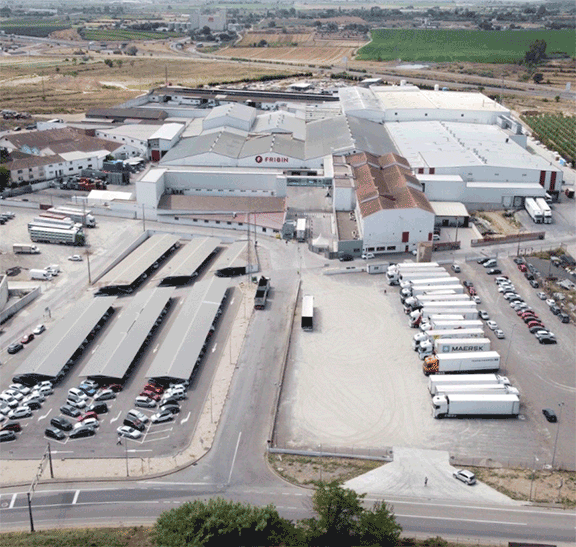
At Fribin, our beef division holds ISO 9001, IFS Food, and other certifications that support the export paperwork our international buyers need, including across Asia and North America.
Logistics: What to Expect
Beef shipped from Spain to Asia usually moves by refrigerated sea freight if it’s frozen, or occasionally air freight for smaller chilled orders. Sea transit to major Asian ports runs roughly three to five weeks depending on the port and carrier. Shipments to the US move faster across the Atlantic.
Before committing to a supplier, ask about:
- Minimum order quantities (container-load pricing is usually the most competitive)
- Cold chain documentation and temperature logs for the whole trip
- Your own import permits — that part’s on the buyer, even with full documentation support from the exporter
Starting a Relationship
Most solid, long-term import relationships start small. A trial order lets both sides check quality, packaging, and communication before anyone commits to full container volumes. If a supplier pushes back on that, that tells you something too.
Fribin has been supplying beef internationally for decades, backed by our certifications and a beef division built specifically for wholesale and export buyers — the kind of wholesale beef supplier Spain buyers can build a long-term relationship with.
Frequently Asked Questions
What’s the minimum order for a wholesale beef supplier in Spain?
Depends on the supplier and format, but a container load is typical for the best pricing. Smaller trial orders are often possible for new relationships — just ask.
How long does shipping take from Spain to Asia?
Three to five weeks by sea to most major ports, plus customs clearance time on your end.
What certifications should I ask for?
At minimum, ISO 9001 and IFS Food, plus the destination-specific export health certificate for the facility.
Frozen or chilled for long-distance import?
Frozen is standard for Asia given the transit times. Chilled is possible but needs faster logistics and usually costs more.
Can I get custom cut specs?
Most reputable exporters can work with custom weights, trim, and packaging — just raise it directly with them before ordering.
Get in touch with our export team to request a catalog or talk pricing for your region.
For general reference on EU food export requirements: European Commission — food export standards.