

Spanish Beef Exporter Asia: Why Demand Is Rising Fast
More Asian buyers are asking about a Spanish beef exporter these days, and it’s not really a coincidence. Spain saw the fastest beef export growth of any country in the world last year, up over 27% year on year, at a time when several traditional big players were pulling back or dealing with production problems of their own.
If you’re a buyer in China, Japan, or Hong Kong and you haven’t looked closely at working with a Spanish beef exporter for Asia yet, here’s why more of your competitors probably have.
Why Spain Is Gaining Ground in Asian Markets
A few years ago, most Asian buyers thought of Spanish beef, if they thought of it at all, as a European product mostly consumed within the EU. That’s changed. EU production overall has been stabilizing at fairly low levels, partly because of environmental regulation and a structural decline in herd sizes across the bloc. That’s pushed Europe to lean more on exports to move volume, and Spain in particular has driven strong beef export growth by building relationships outside the EU.
At the same time, some of the traditional major suppliers to Asia have had a rougher run. Global beef production dipped in 2026 across several big exporting countries, and tighter supply combined with strong Asian demand has pushed buyers toward beef supply chain diversification instead of leaning on just one or two countries. When a shipment gets delayed, or a tariff dispute flares up somewhere, buyers with a single-country supply chain are stuck. Buyers who’ve built diversification into their sourcing aren’t.
A reliable Spanish beef exporter offers Asian buyers something that’s becoming more valuable every year: a stable, well-documented, EU-regulated source that isn’t tied to the same geopolitical and trade risks as some of the more traditional exporters.
EU Beef Traceability and What It Means at Customs
EU beef traceability requirements get undersold in most conversations about sourcing, but they matter enormously in practice. EU law requires full farm-to-processing traceability on every animal. For Japanese and Chinese import authorities in particular, that kind of documentation isn’t a nice-to-have — it’s often the difference between a shipment clearing customs smoothly and one that gets held up for weeks. A well-run Spanish beef exporter serving Asia has already built systems around this level of traceability, which puts them ahead of the curve on the kind of scrutiny Asian markets expect.
Quality and Price: What Buyers Are Actually Getting
Quality plays a role too. A lot of Spain’s cattle farming happens on extensive grazing land in the north and center of the country, and that tends to produce meat with good, consistent marbling. For buyers sourcing premium beef for Hong Kong and Japan hospitality or retail, where presentation and consistency really matter, that’s not a small thing.
Price is part of the story as well, though it’s not the whole story. Spanish beef tends to sit competitively against other premium origins once you account for the reliability and documentation that comes with it. Buyers aren’t just paying for the meat — they’re paying for a supply chain that’s less likely to fall apart on them.
What to Check Before Choosing a Spanish Beef Exporter
If you’re thinking about adding a Spanish supplier to your sourcing mix as part of your own beef supply chain diversification, a few things are worth checking early:
- Ask about the specific certifications the plant holds, not just the country-level ones
- Ask whether the facility is already approved to export to your specific country, since that approval usually happens at the plant level for markets like China and Japan, not just nationally
- Ask for real documentation on cold chain handling, since that’s what protects the product on a five-week sea voyage
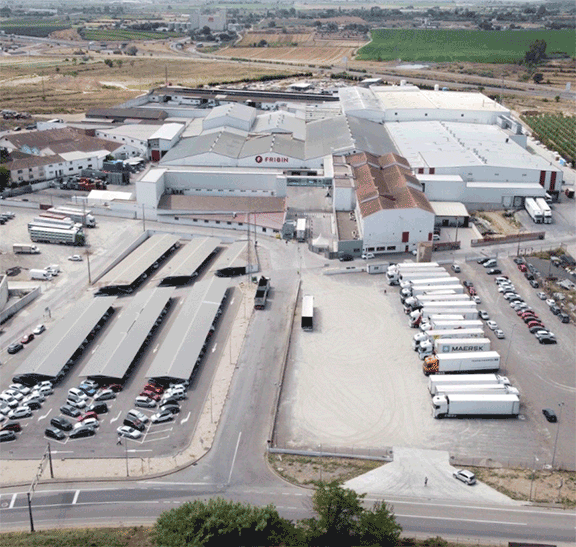
Fribin has built its beef export operations around these exact requirements. Our beef division holds ISO 9001 and IFS Food certification, among others, and we’ve spent years working with import authorities across Asia to keep our documentation aligned with what buyers sourcing premium beef for Hong Kong and Japan actually need at customs.
Frequently Asked Questions
Why is Spanish beef export growth outpacing other countries?
Partly because EU production constraints are pushing more volume toward export markets, and partly because several traditional exporters have had a tougher 2026 on the supply side. Spain has been actively filling that gap.
Is Spanish beef more expensive than South American beef?
It depends on the cut and grade, but pricing is generally competitive once you factor in documentation quality and the lower risk of trade disruption.
What certifications should I look for from a Spanish beef exporter?
At minimum, ISO 9001 and IFS Food, plus destination-specific health certification for the individual processing plant.
How is Spanish beef typically shipped to Asia?
Mostly frozen via refrigerated sea freight, with transit generally running three to five weeks depending on the port.
Can a new buyer start with a smaller order to test the relationship?
Most established exporters, including us, are used to starting new international relationships with a trial order before scaling to full container volumes.
If you’re evaluating a Spanish beef exporter for Asia as part of your sourcing strategy, we’re happy to talk through certifications, cuts, and logistics for your specific market. Reach out to our export team to request a catalog.
Source for export growth data: World’s Top Exports — Top Beef Exporting Countries